
The flicker of Christmas lights spelling out "R-U-N," the echo of a girl's shaved head in a sterile lab, the unnerving sensation that a parallel, monster-filled dimension might be just a tear away—Stranger Things masterfully taps into a deep, collective fear. But as you binge-watch from your couch, a creeping thought emerges: Could any of this be real? Is Hawkins Lab a work of pure fiction, or does it mirror shadows from our own history?
The short, comforting answer is no, the specific events and characters of Stranger Things are not documented true events. There is no police record of a boy named Will Byers vanishing into a monstrous dimension in 1983 Indiana.
However, the Duffer Brothers wove their tale from a rich tapestry of very real government experiments, cultural anxieties, and historical conspiracy theories. The series' genius lies in how it stitches together these unsettling truths with iconic 80s pop culture, creating a story that feels hauntingly plausible.
Let's peel back the veil and explore the real-world inspirations that make the world of Stranger Things so compellingly believable.
Part 1: MKUltra & The Dark Heart of Hawkins Lab
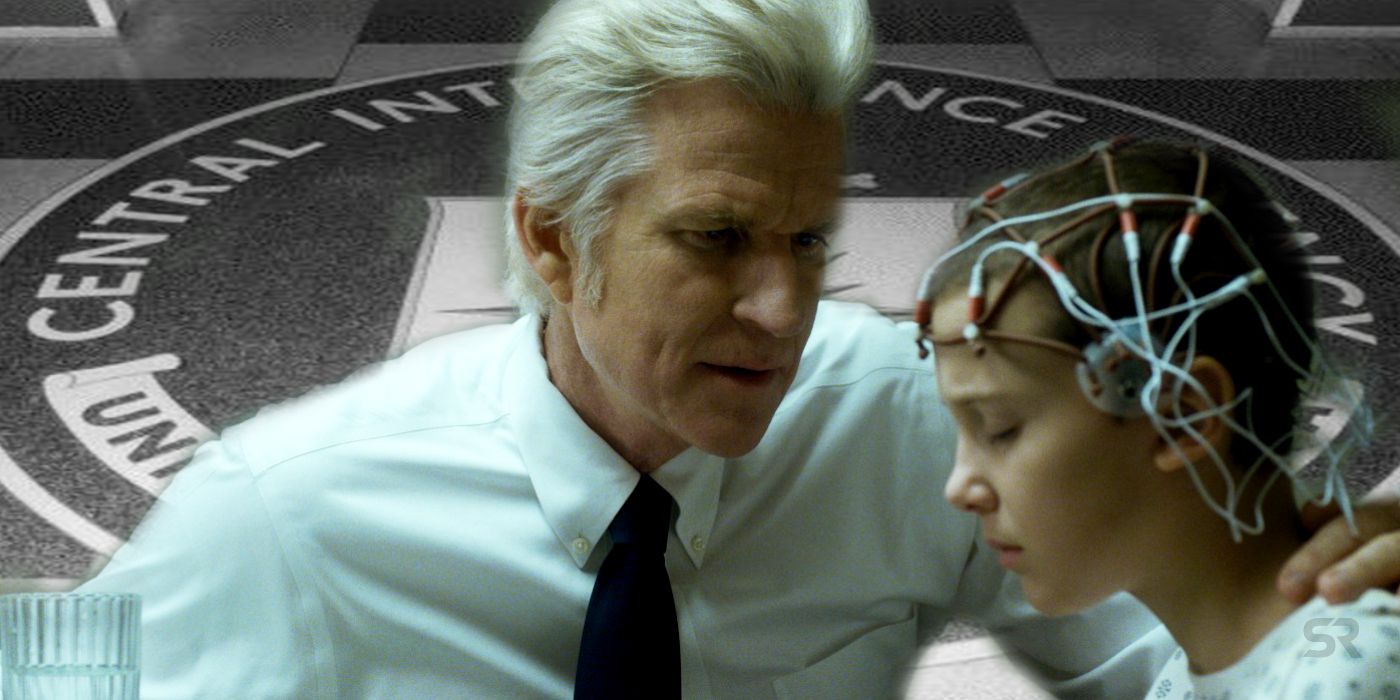
The most direct and chilling connection to reality is Project MKUltra. This was a real, extensive CIA program that ran from the early 1950s through the late 1970s. Its goal? Mind control.
The Real-World Experiment:
Objective: To develop procedures and identify drugs that could break down individuals, alter their mental states, and force them to comply with interrogations or commit acts against their will.
Methods: The CIA funded secret experiments on unwitting American and Canadian citizens using LSD, hypnosis, sensory deprivation, psychological torture, and abuse.
The Subjects: Patients in hospitals, prisoners, sex workers, and members of the public who had no idea they were part of an experiment. Dr. Martin Luther King Jr. was even a target of surveillance under a related sub-project.
The Stranger Things Parallel:
Hawkins National Laboratory is a near-perfect fictional stand-in for the MKUltra legacy. Eleven ("El") is the ultimate MKUltra subject: a child raised in isolation, subjected to traumatic experiments to weaponize her mind. Dr. Brenner is the quintessential cold, unethical government scientist, viewing his subjects as tools rather than human beings.
The Verdict: While the CIA wasn't trying to open portals to other dimensions, the moral horror, the secrecy, and the abuse of vulnerable individuals depicted in Stranger Things are directly pulled from declassified MKUltra files.
Part 2: The Montauk Project & The Named Inspiration
Here's where it gets even more intriguing. Early drafts and the original pitch for Stranger Things had a different title: "The Montauk Project."
The Conspiracy Theory:
The "Montauk Project" is a legendary conspiracy theory alleging a series of U.S. government experiments at Camp Hero or Montauk Air Force Station in New York. Tales include:
Psychological warfare and mind control experiments (tying back to MKUltra).
Experiments with opening portals in time and space.
Contact with extraterrestrial beings.
In some versions, a young boy with psychic powers is central to the experiments.
The Stranger Things Parallel:
Sound familiar? The Duffer Brothers took the core elements of this conspiracy—a secret military site, psychic children, and rips in spacetime—and transplanted them to the fictional town of Hawkins, Indiana. The Demogorgon and the Upside Down became their unique interpretation of the "alien" or inter-dimensional entities hinted at in these myths.
The Verdict: The Montauk Project is widely considered a work of collaborative fiction and conspiracy lore, not documented history. However, it serves as the direct narrative blueprint for the series' core plot.
Part 3: Other Eerie Real-World Echoes
Beyond these two major pillars, Stranger Things borrows from other unsettling chapters of history:
The "Exploding Head" Syndrome & Sensory Deprivation: Eleven's remote viewing in a sensory deprivation tank has roots in real (though less dramatic) CIA experiments. Furthermore, the show's psychic nosebleeds medically mirror a condition called "Exploding Head Syndrome," adding a layer of bodily realism.
Cold War Paranoia: The pervasive fear of the Soviet threat in Season 3 isn't just backdrop. It reflects the genuine, palpable anxiety of the 1980s, where the enemy felt both distant and impossibly close.
The Satanic Panic: The suspicion directed at Hellfire Club leader Eddie Munson in Season 4 is a direct reference to the "Satanic Panic" of the 80s and 90s, where heavy metal music, role-playing games like Dungeons & Dragons, and unconventional lifestyles were falsely linked to ritual abuse and occult crimes.
Why Does It Feel So Real? The Power of Nostalgia
Beyond the historical parallels, Stranger Things feels true because of its emotional authenticity. The Duffer Brothers didn't just borrow plots; they bottled the essence of the 1980s:
The Aesthetic: The wood-paneled basements, the Walkie-Talkies, the Dungeons & Dragons manuals—it’s a meticulously crafted time capsule.
The Cinematic Homage: The show is a love letter to the works of Steven Spielberg, John Carpenter, and Stephen King. We've seen brave kids on bikes (E.T., The Goonies), terrifying government agencies (Firestarter), and small-town supernatural horror (It). This familiarity creates a powerful sense of cultural truth.
Conclusion: The Alchemy of Truth and Fiction
So, is Stranger Things based on true events? Not literally. There is no Demogorgon in the declassified files.
But is it based on true fears, true experiments, and true stories? Absolutely.
The series is a masterful alchemy. It takes the documented horrors of MKUltra, blends them with the wild, speculative myths of projects like Montauk, and sets it all against the authentic backdrop of 80s adolescence. It asks a timeless question: "What if the darkest government conspiracies we suspect were true... and also involved inter-dimensional monsters?"
That’s the genius of Stranger Things. It doesn't just tell a story about the supernatural; it roots its horror in the very real darkness of human experimentation and the universal anxiety of what might be hiding just out of sight—whether in a government lab, the woods at the end of your street, or the void behind your own closed eyelids.
What do you think? Are there other real-world conspiracies or events you see reflected in Hawkins? Share your theories in the comments below—and maybe sleep with a nightlight on. Just in case.