
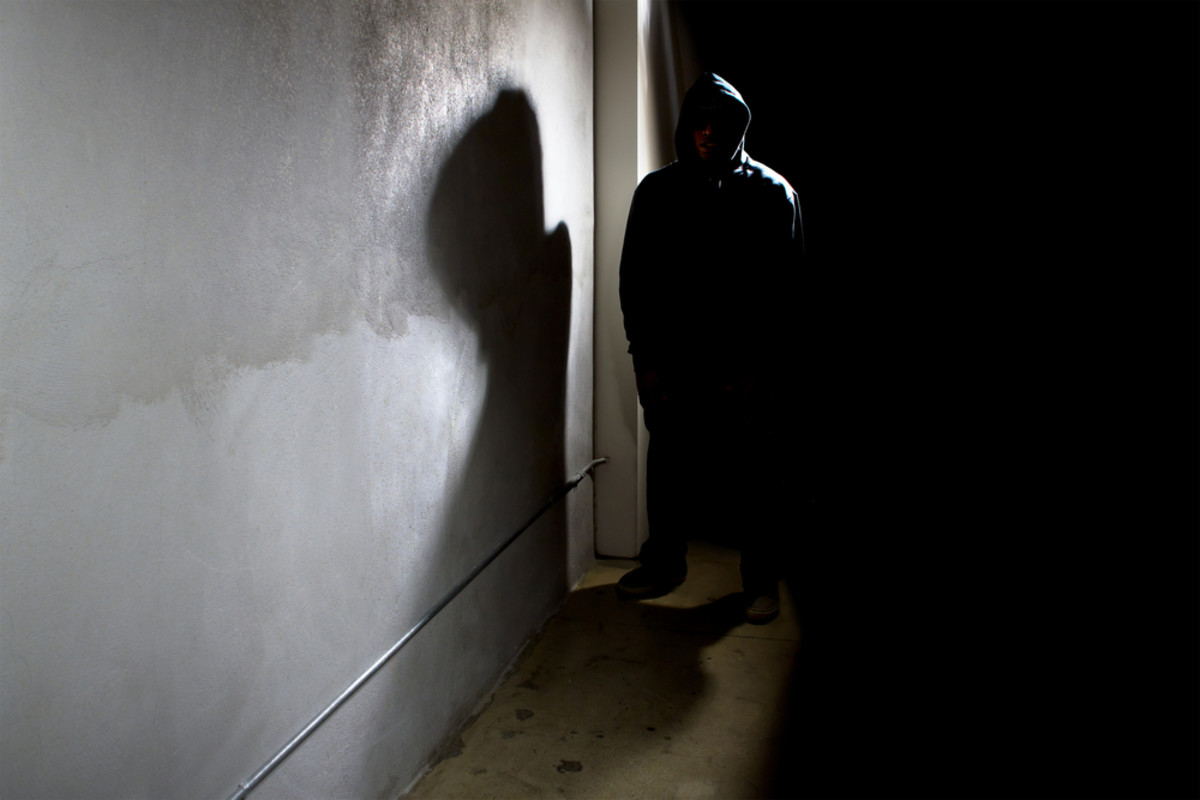
The sensation of being watched—despite having no concrete evidence—is a nearly universal human experience that bridges psychology, neuroscience, anthropology, and even spirituality. This phenomenon is not merely paranoia but a complex interplay of biological hardwiring, cognitive processes, social conditioning, and environmental cues. Let’s dissect it layer by layer.
1. The Evolutionary Hardwiring: The Hyper-Vigilant Brain
At its core, this feeling is rooted in evolutionary survival mechanisms. For our ancestors, detecting a predator or a rival human before being detected was a matter of life and death. This created a negativity bias in our threat-detection systems:
Type I vs. Type II Error: From an evolutionary standpoint, it’s safer to mistakenly believe you’re being watched (a false positive) than to miss a genuine threat (a false negative). Your brain is wired to err on the side of caution.
The "Gaze Detection" Neurological Circuitry: Our brains have specialized neural networks, particularly involving the amygdala (the threat center) and the superior temporal sulcus, which are exceptionally sensitive to faces and most especially to eye direction. We can detect gaze direction from peripheral vision or minimal cues, often subconsciously.
The "Uncanny Valley" of Observation: In ambiguous situations (e.g., a quiet street, a dark room, a forest), our brains fill in gaps with the most threat-relevant narrative. The feeling of being watched is the brain’s alert system kicking in when data is incomplete.
2. Cognitive Biases and Perceptual Tricks
Our minds use shortcuts (heuristics) that can generate this sensation:
Hyperactive Pattern Recognition (Apophenia): Our brains are meaning-making machines. Random noises, shadows, or peripheral movements can be unconsciously assembled into the pattern of "a watcher."
The Spotlight Effect: We chronically overestimate how much attention others pay to us. This social anxiety magnifies the feeling that we are under observation, even when we’re not.
Confirmation Bias: Once the thought "I am being watched" occurs, we selectively scan the environment for confirming evidence (a face in a window, someone glancing our way) and discount disconfirming evidence.
Projection: Sometimes, if we are ourselves watching, judging, or thinking intensely about others, we may unconsciously project that state onto the environment, feeling it reflected back at us.
3. The Social and Cultural Layer
We are social species governed by norms, shame, and the judgment of the group.
The Imagined Audience: Particularly strong in adolescence but present throughout life, this is the internalized sense that a "social audience" is constantly evaluating our actions. This stems from our deep need for belonging and fear of ostracization.
Cultural and Religious Imprints: Concepts like an omniscient God, ancestral spirits, or fate can create a substrate where the feeling of being observed is interpreted through a spiritual lens. In secular contexts, this can translate to a vague sense of "the universe" or karma watching.
Modern Panopticon: Sociologist Michel Foucault used the Panopticon—a prison where inmates feel perpetually watched by a central tower—as a metaphor for modern societal control. In today's world, with CCTV, digital tracking, and social media surveillance, the literal knowledge of being monitored can bleed into a generalized, low-grade feeling of visibility.
4. Neurological and Physiological Factors
Sometimes the cause is internal:
Sleep Deprivation & Stress: Heightens amygdala activity and cortisol levels, putting the brain in a hyper-vigilant, threat-sensitive state. Paranoid ideation increases.
Dissociation & Depersonalization: During episodes of dissociation, one’s perception of self and environment becomes distorted. Feeling watched can be a symptom, as the mind tries to re-anchor itself by externalizing awareness.
Subtle Seizures or Migraine Auras: Rarely, temporal lobe epilepsy or certain neurological conditions can include "presence hallucinations"—the vivid, unsettling feeling that another entity is nearby. Oliver Sacks documented such cases.
5. Environmental and Paranormal Explanations
While not scientifically validated, these interpretations are culturally significant:
The "Psychic Gaze" Hypothesis: Some parapsychological theories suggest that intense attention from another person, especially if emotionally charged, might be perceived on a subconscious level, a form of non-local awareness.
Infrasound: Low-frequency sound waves (below 20 Hz), inaudible to humans, can cause feelings of unease, dread, and the sensation of a "presence." These can be generated by wind, machinery, or geological phenomena.
The "Unseen Presence" in Extreme Environments: Solo explorers, mountaineers, and astronauts often report a "third man" feeling—a sensed companion or watcher. This is likely a coping mechanism of an isolated, stressed brain seeking social support.
6. The Spiritual and Existential Dimension
Beyond pathology, the feeling can touch on profound human questions:
The Search for Meaning: In an indifferent universe, the feeling of being watched can paradoxically provide comfort—it implies significance. If someone/something is watching, then our existence matters.
The Internal Observer: In meditation and mindfulness traditions, the feeling is sometimes reframed as awareness of one's own inner witness—the part of consciousness that observes the self. This can be misinterpreted as an external presence.
The "Other": Philosophers like Sartre and Lacan discussed the constitutive role of "The Gaze" in human identity. We become self-aware subjects precisely through being seen by another. The feeling of an anonymous gaze taps into this foundational need for recognition.
Synthesis: An Integrated Understanding
The sensation of being watched is rarely due to a single cause. It is typically a convergence:
An ambiguous stimulus (a shadow, a window that could hold a face, a rustle).
Processed by a hyper-sensitive, evolutionarily-old threat-detection system.
Filtered through cognitive biases that favor threat narratives.
Interpreted through a personal and cultural lens (am I being judged? is it a ghost? is it my anxiety?).
Amplified or dampened by one's current physiological state (tired, stressed, or calm).
It is a liminal experience—perched on the boundary between perception and projection, the inner and outer world, the biological and the social. It reveals that our experience of reality is not a passive reception of data, but an active construction, shaped deeply by the ancient need to survive in a world where unseen eyes often meant danger, and the modern need to find our place in a complex social and cosmic order.
Ultimately, feeling watched is a testament to the human mind's profound, sometimes overzealous, commitment to one primary task: to navigate a world teeming with other minds, both seen and unseen.