
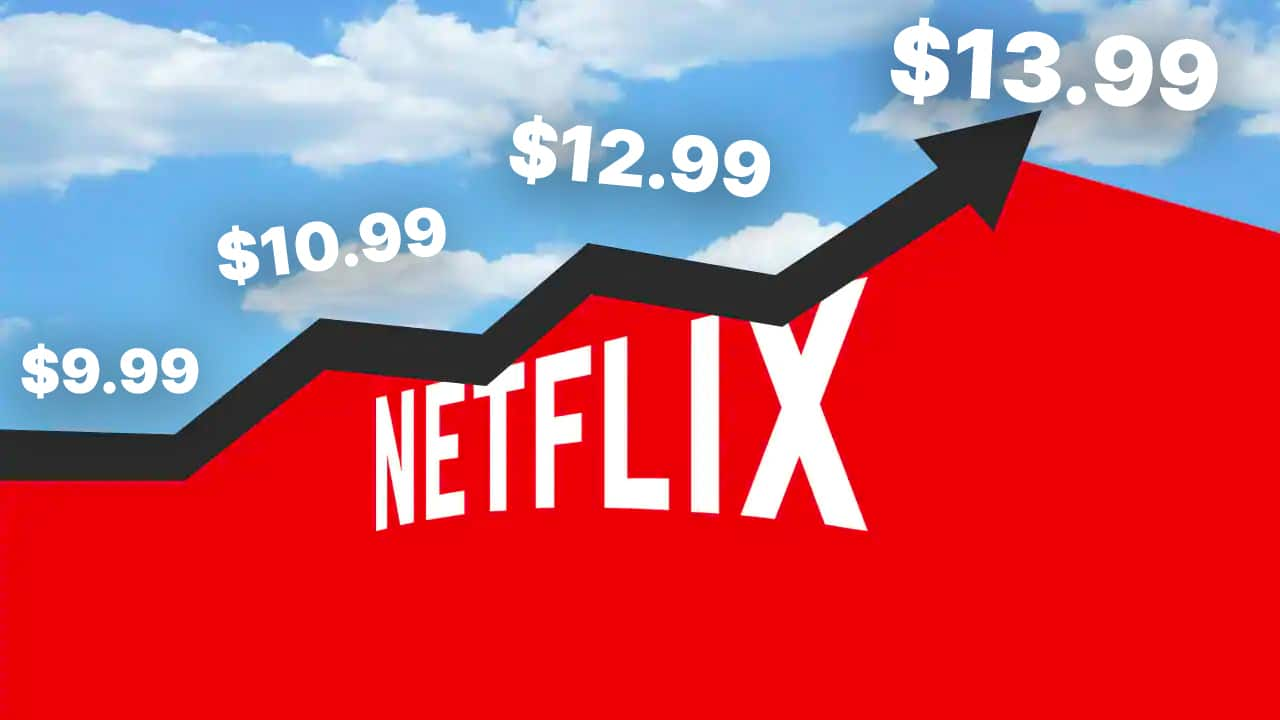
Netflix's repeated price increases are not arbitrary decisions but strategic moves driven by a complex interplay of financial pressures, competitive dynamics, and long-term ambitions. Here’s a detailed breakdown of the key factors:
1. The Core Driver: The Content Arms Race and Soaring Production Costs
Skyrocketing Budgets: Netflix’s shift from licensed content to original programming ("Netflix Originals") placed it in direct competition with Hollywood studios and streaming rivals. High-quality series like Stranger Things, The Crown, and The Witcher often cost $10–$20+ million per episode. Blockbuster films (e.g., The Gray Man, Rebel Moon) can exceed $200 million.
Inflationary Pressures: Post-pandemic, production costs (labor, VFX, location, marketing) have surged. Netflix must fund not just hits but a vast, global content library spanning multiple genres and languages to retain diverse subscribers.
Content Debt & ROI Pressure: While Netflix is now cash-flow positive, it spent years borrowing billions to build its library. Price hikes help accelerate ROI and fund future slates without returning to heavy debt.
2. The Competitive Landscape: From First Mover to Defending Turf
Market Saturation in Mature Regions: In the U.S., Canada, and parts of Europe, subscriber growth has plateaued. With nearly everyone who wants Netflix already subscribed, revenue growth must now come from extracting more value per user (ARPU increase) rather than adding volume.
The "Streaming Wars" Margin Squeeze: Competitors like Disney+, HBO Max, Apple TV+, and Amazon Prime have deep pockets (some subsidized by other businesses). Netflix can no longer compete on low price alone; it must compete on content quality and scale, which is astronomically expensive.
Password Sharing Crackdown as a Precursor: The recent crackdown was a strategic pivot to convert "freeloaders" into paying accounts. Once that low-hanging fruit is captured, price increases become the next logical lever to pull for revenue growth.
3. Business Model Evolution: The Search for Sustainable Profitability
Investor Expectations: As a mature public company, Netflix is under intense pressure to show consistent profit growth, not just subscriber growth. Margins matter more than ever.
The Ad-Tier Gambit: The introduction of the lower-priced, ad-supported tier was a trojan horse. It created a new revenue stream (advertising) and provided a psychological price anchor. When the premium, ad-free tiers increase in price, the ad-tier looks more attractive, segmenting the market and driving users toward a model that can generate dual income (subscription + ad revenue).
Global Expansion vs. Regional Pricing: In growth markets (Asia, Latin America), Netflix often uses lower price points. Hikes in North America and Western Europe subsidize global expansion and content investment for these less profitable regions.
4. Strategic Calculus: What Netflix Believes It Can Get Away With
The "Stickiness" of Habit: Netflix has deeply embedded itself into daily life and culture. They bank on high switching costs—not financial, but behavioral. Losing your profile, algorithm, and access to familiar franchises is a psychological barrier to cancellation.
Perceived Value vs. Alternatives: Despite increases, Netflix often remains comparable or cheaper than cable or bundling multiple rivals. They calculate that for many, the value of their all-in-one library still justifies the cost.
Incremental, Tiered Approach: Increases are typically rolled out gradually by region and tier. The premium 4K tier takes the largest hikes, targeting the most engaged, quality-sensitive users who are least price-sensitive. This minimizes widespread churn.
5. Macroeconomic and Industry-Wide Factors
Economic Environment: In periods of inflation, companies across industries raise prices. Netflix argues it's delivering "more value" (more content, features) to justify the increase.
Industry Trend: Streaming is no longer a loss-leader business. Every major streamer (Disney+, Hulu, Peacock) has raised prices recently. This normalizes the practice and reduces risk of mass subscriber flight to a cheaper alternative, as alternatives are also getting pricier.
6. Long-Term Vision: Funding the Next Growth Phase
Gaming and Live Events: Netflix is investing in mobile gaming and live specials (comedy, sports-like events). This requires R&D and new content formats.
Technology Investment: Maintaining a seamless, high-bandwidth streaming experience across thousands of device types requires massive infrastructure and R&D in compression, encoding, and delivery.
IP Monetization: To build franchises (like Wednesday or Squid Game) that can generate revenue beyond subscriptions (merchandising, games, experiences), initial investment must be recouped.
The Consumer's Dilemma & The Breaking Point
Each increase tests the elasticity of demand. Netflix employs sophisticated churn prediction models to time and size hikes. The risk is subscription stacking fatigue—consumers may finally decide to rotate services or drop Netflix for a quarter. However, Netflix's strategy assumes its content volume and habit-forming ecosystem create a moat that protects it.
In essence, Netflix is raising prices because it can, and because it must. It must fund an unsustainable content spend in a saturated, competitive market, while transitioning from a growth-at-all-costs startup to a profitable, multi-revenue stream media giant. The recurring price hike is the most direct tool to achieve that, carefully balanced against the perennial fear of triggering a subscriber exodus.